Any camera.
Every board.
Live.

We turn the cameras chess clubs already have into live broadcasts of every physical game: position, moves and PGN for each board. No sensor boards and no per-board hardware.

Raising $1M pre-seed. 45 boards broadcast at once · 595 viewers in one day · in weekly use at Israel's largest club.

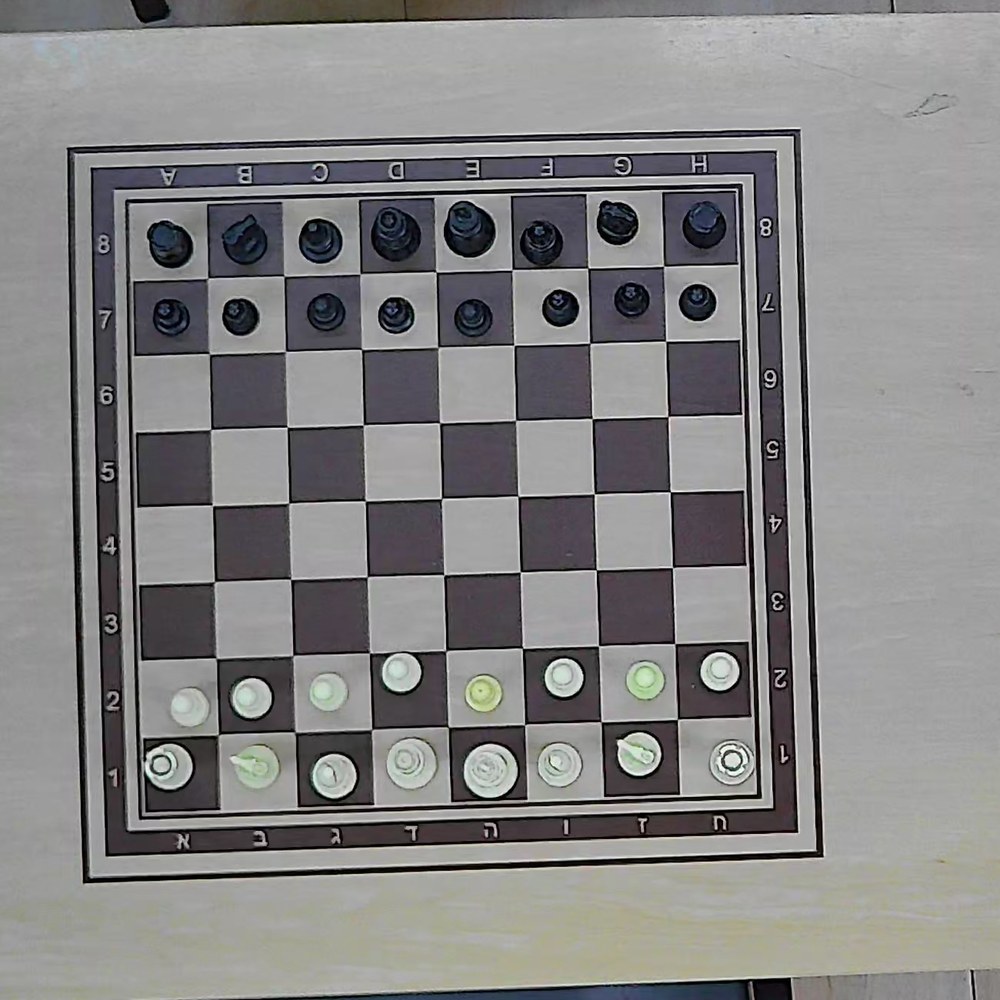
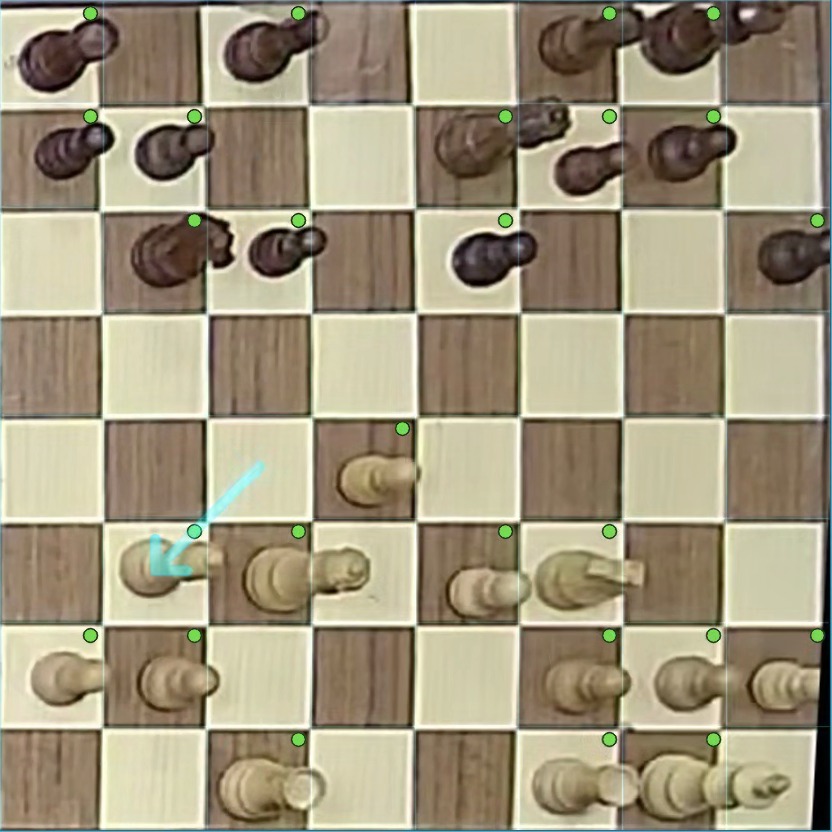
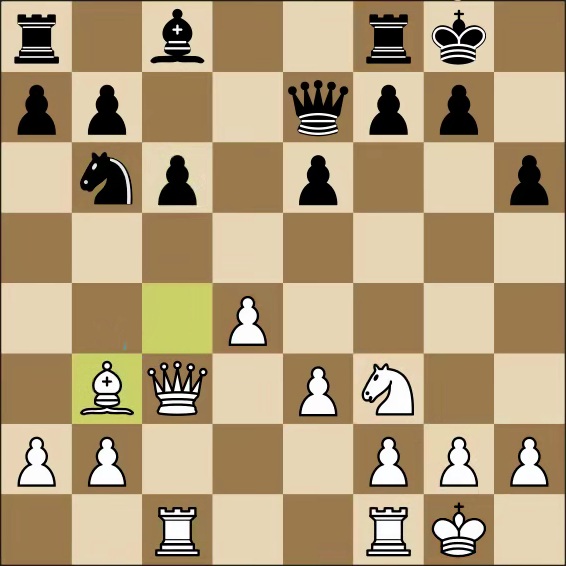
Camera view, reconstructed position and move list at the same moment of a real game
Same moment of a real game, Ramat Gan club: camera view → reconstructed position → move list.
45boards broadcast live at the same time, Dov Porat festival
595unique viewers in one day
86 minaverage watch time per viewer, one tournament
556 hof games watched in a single day

Dov Porat festival, Sukkot 2026; broadcast-site analytics, 27–28 September (86 min: 271 viewers, 28 Sept).

Over-the-board chess is invisible online.

Chess.com and Lichess broadcasts depend on DGT sensor boards, so only elite events are streamed. Weekly club and youth games are almost never broadcast.

Sensor boards (DGT)
Chessboard AI Live
Who gets seen
Top events only
Any board a camera sees
Cost
Hardware for every board
Software, priced per venue
Setup
Wire and pair each board
Point an existing camera
Equipment
Special boards and pieces
The club's own sets

Camera in. Live game out.

Board detection, piece recognition and temporal reasoning validated against the rules of chess produce the live position, move list and PGN for every board.

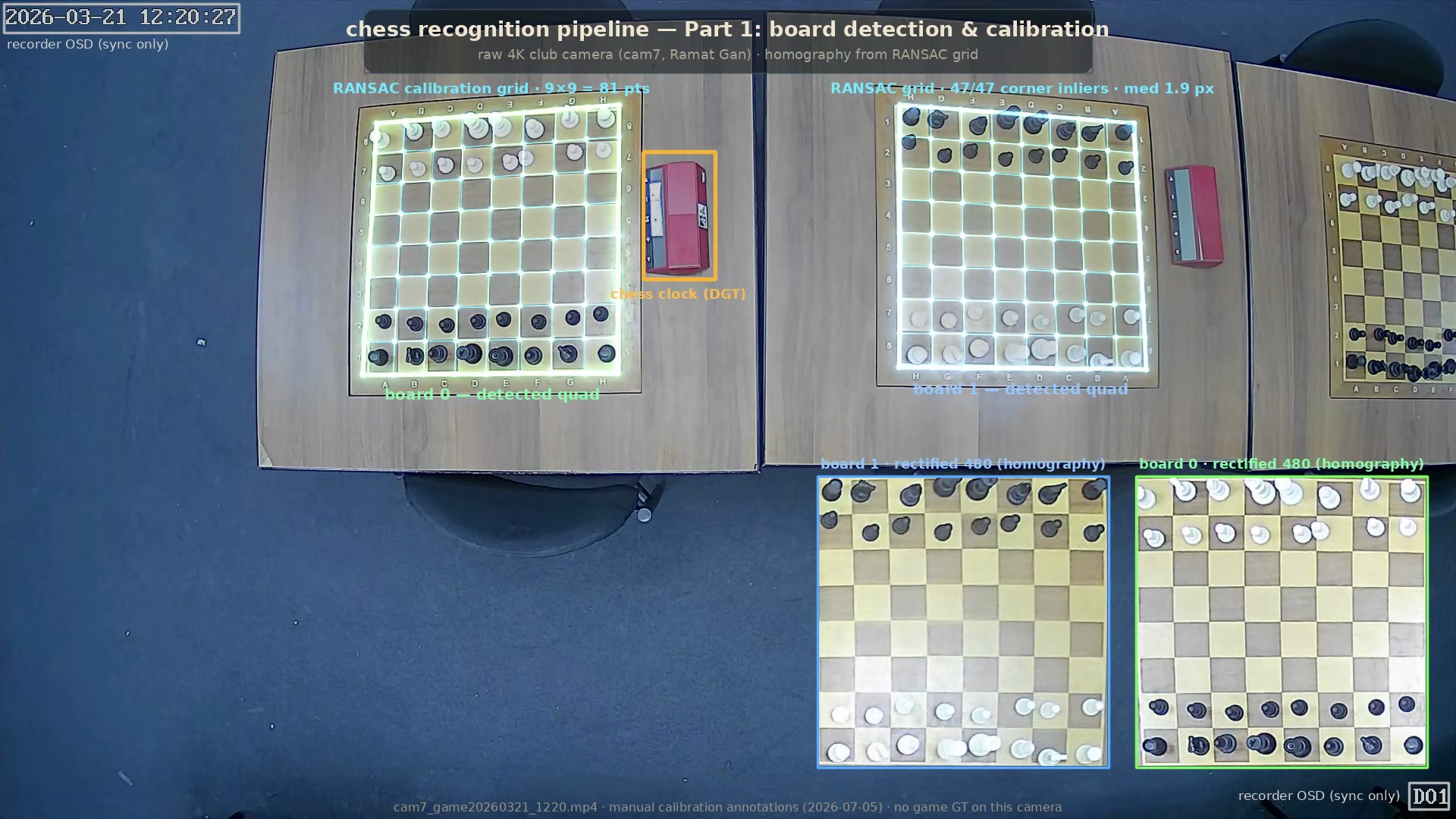
Raw 4K overhead frame from a club camera showing two boards
01 · CAPTURE

The club's existing camera

An ordinary overhead camera sees several boards; nothing is added to the tables.

Board straightened from the club camera; every piece checked and the move detected
02 · RECOGNISE

Boards and pieces, read

Each board is located and straightened; every square is classified frame by frame and the move is detected.

The reconstructed digital position at the same moment
03 · BROADCAST

Every board online

The position and move list go live on the web. Spectators followed 45 boards at once this way.

Steps 02 and 03 show the same moment of a real game, Ramat Gan club.

Raw 4K club camera frame: boards detected, calibrated and straightened
Raw 4K club camera: every board found, calibrated and straightened automatically.
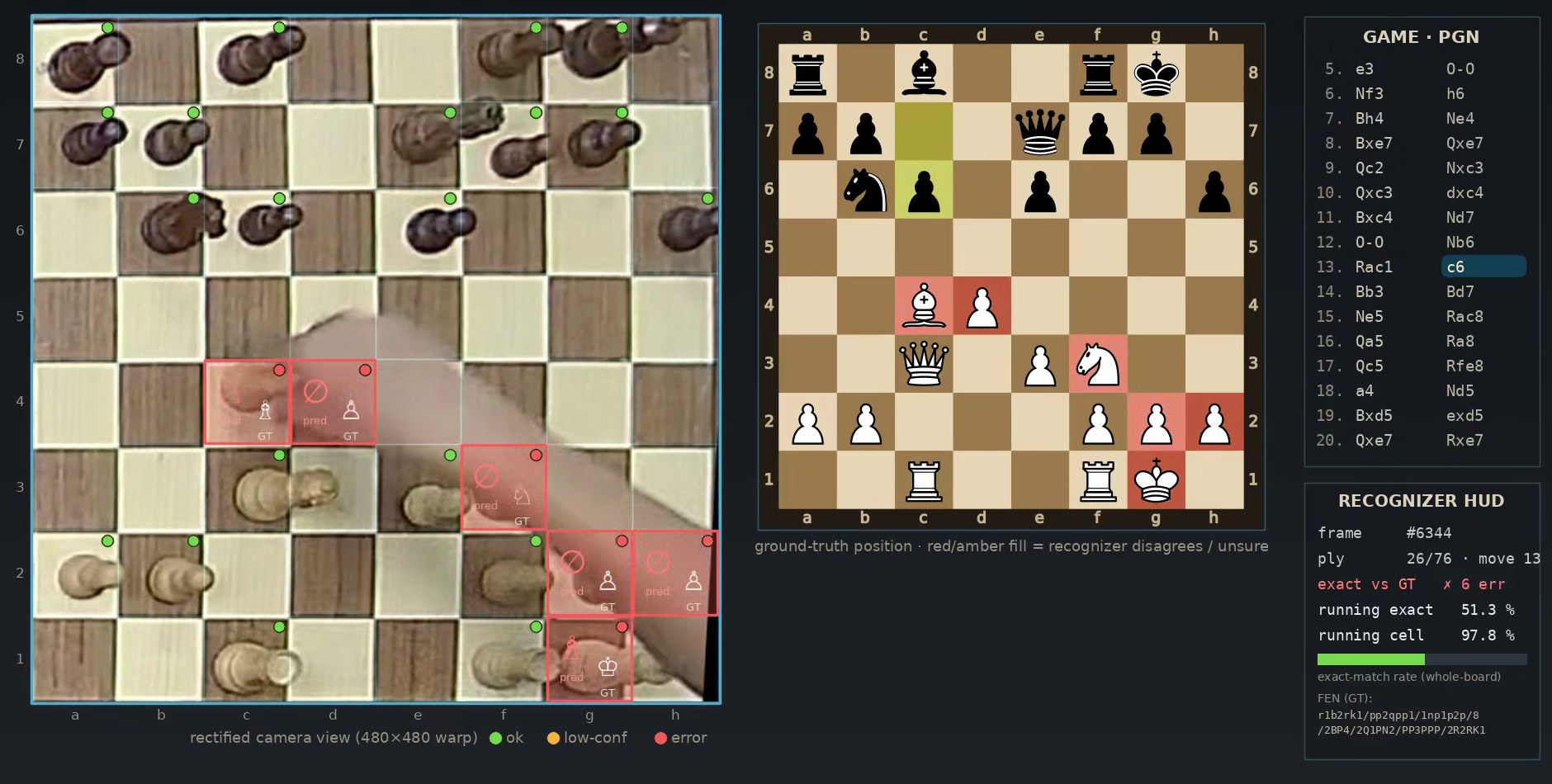
Live game vs ground truth: a hand over the board, affected squares flagged
Live game vs ground truth, Ramat Gan club: a hand covers the board, the affected squares are flagged, and the move is recovered once the hand leaves.

On-premiseA box in the venue, next to the cameras.

CloudGPU inference in the cloud with a central spectator site for the audience.

Already running in three clubs.

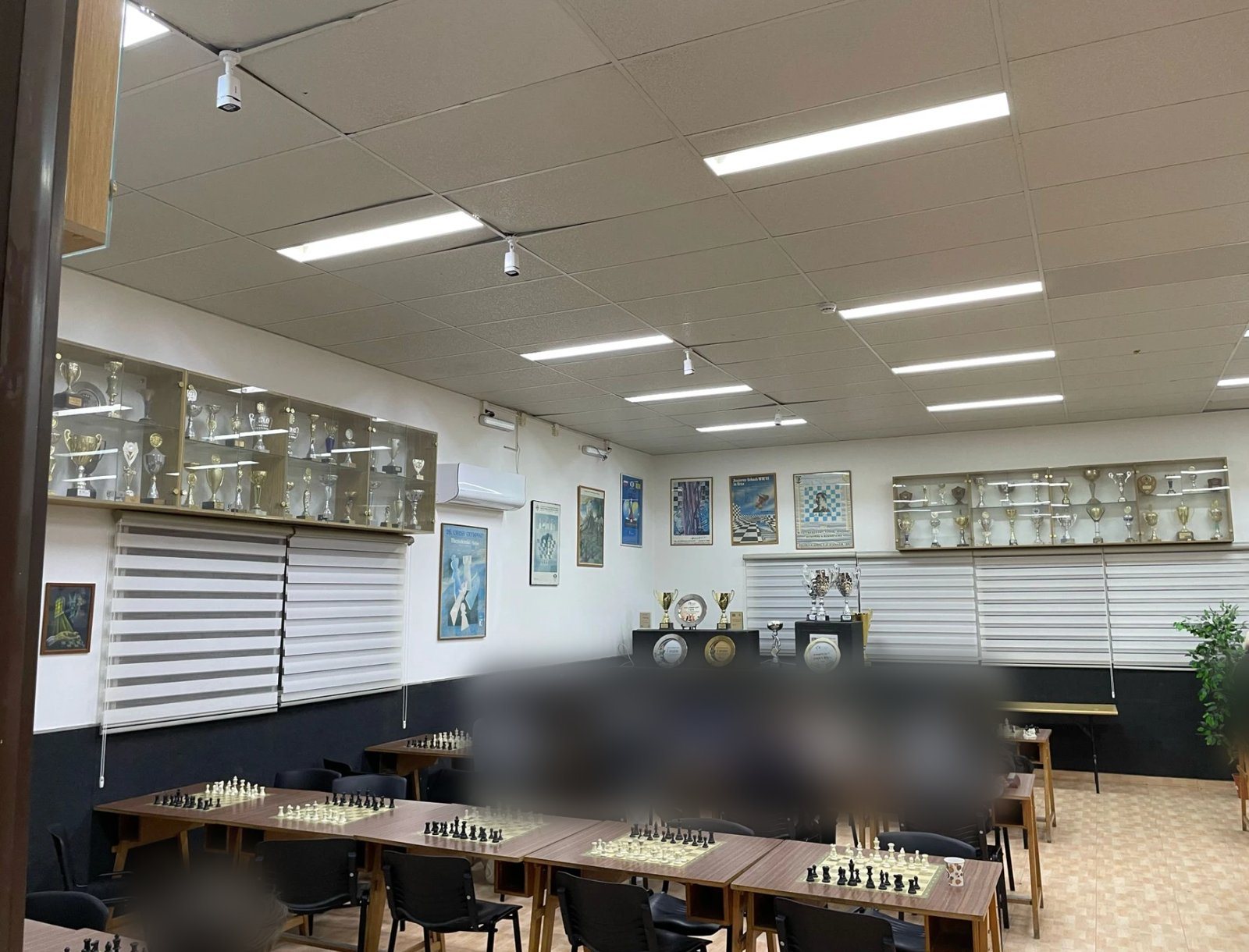
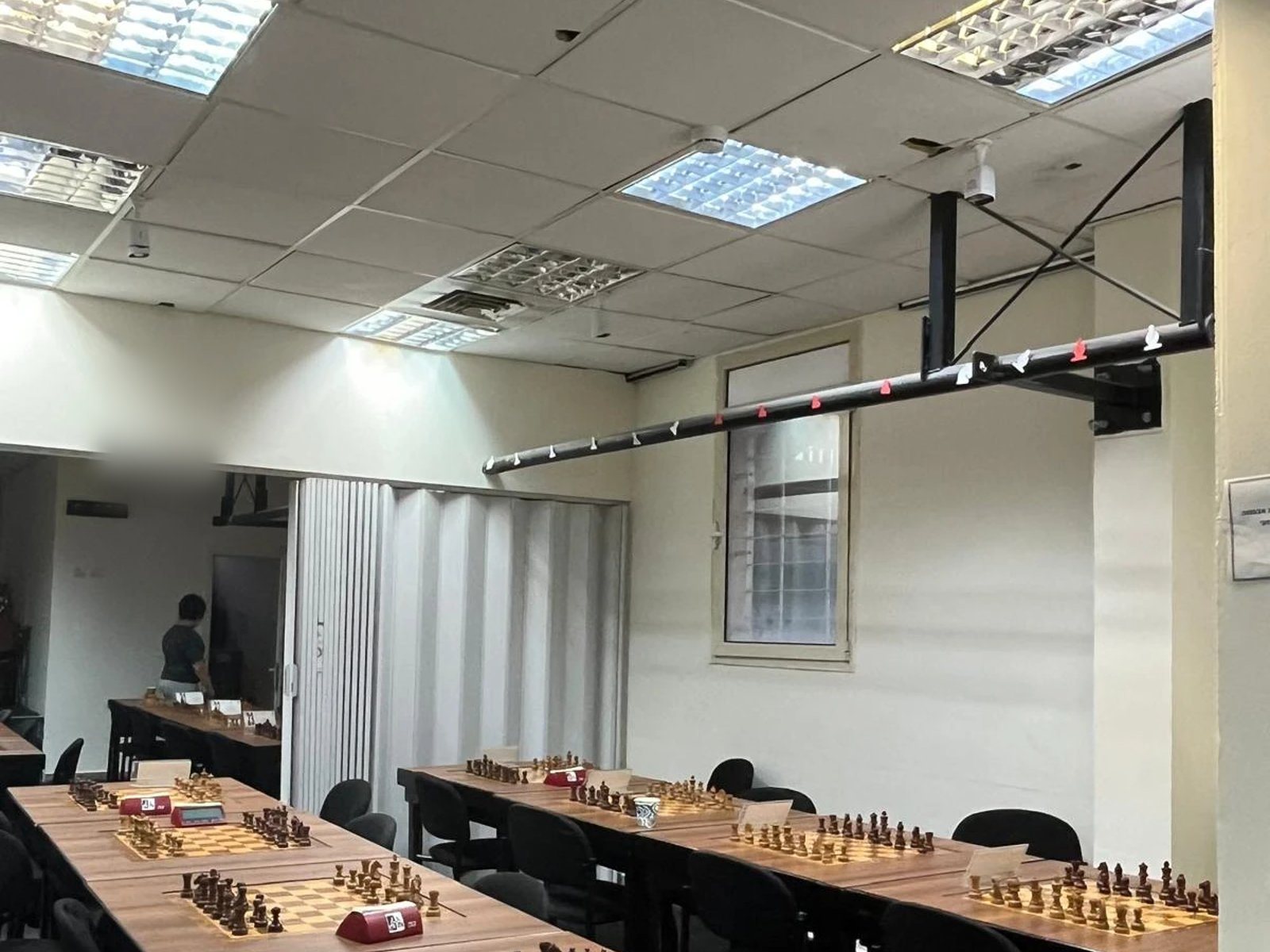
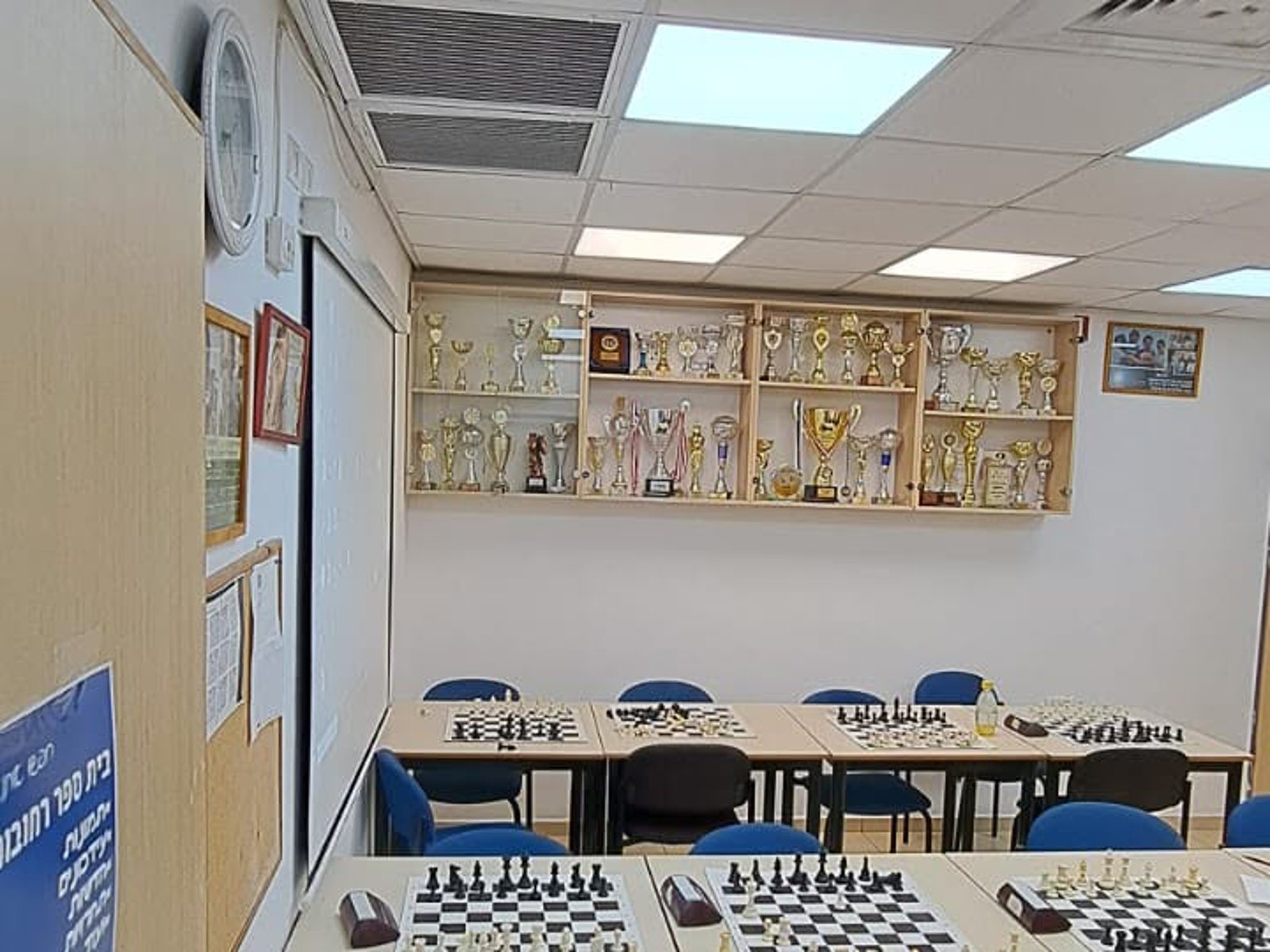
Our design partners are clubs in Be'er Sheva, including Israel's largest, Ramat Gan and Rehovot.

Be'er Sheva chess club hall
Be'er Sheva · Israel's largest club, in weekly use
Ramat Gan chess club hall
Ramat Gan
Rehovot chess club hall
Rehovot

3 clubs · 50+ cameras · 100+ boards · 10+ servers

Demand is pulling. Other Israeli clubs have asked us to install the system, and the Israel Chess Federation youth committee wants it for the national championships.

Organic audience. 271 viewers followed one tournament on 28 September, 86 minutes each on average (median 22).

A data engine that compounds. 50+ cameras in live clubs feed the training set; ~1,000 newly labelled boards went into the 28 September model.

Viewers stay. 161 viewers watched for over an hour on 27 September.

Clubs are the wedge. Federations and schools are the market.

~200 FIDE federations each run clubs, rated tournaments and youth championships, and every event is a per-board licence. Clubs are our wedge, not our ceiling.

~200national federations in FIDE, each with its own clubs and events
605Madults play chess regularly
$2.2B → $3Bglobal chess market, 2023 to 2032
1 · Clubs$350–1,250 a year per club; Israel first
2 · Tournaments$100 + $10 per board, every event
3 · Federationsnational and youth championships
4 · Schools & academiesparents want to watch

Planned pricing: by the hall, not by hardware.

Clubs are design partners today; this is the go-to-market plan. A club's cost grows with its hall, not with hardware, and organisers can license a single weekend.

PlanBoardsPrice
Small club10$350 / year
Standard club25$750 / year
Large club50$1,250 / year
Tournament licenceany$100 + $10 per board

A 25-board club: $750 a year.With sensor boards, the same club would buy and maintain hardware for every one of its 25 boards.

One 45-board festival: $550.A single weekend licence ($100 + 45 × $10).

No hardware on the tables at any tier. A $5/month player subscription is planned.

Computer-vision researchers who play the game.

A founding team from Ben-Gurion University of the Negev.

Dr. Michael FireCo-founderSenior Lecturer, Software & Information Systems Engineering, BGU. AI and big data. Competitive chess player.
Prof. Oren FreifeldCo-founderAssociate Professor of Computer Science, BGU. Computer vision, machine learning, video and time-series analysis. Competitive chess player.
Andrey LavrinenkoCo-founder · EngineeringPhD researcher in Computer Science, BGU. Senior full-stack engineer; built the deployed system. Competitive chess player.
Yonatan BaruchMachine learningM.Sc. researcher, BGU. Data scientist; trains the production recognition model.
$1Mpre-seed round

18 months to 100 club subscriptions and 200 event licences, starting in Israel and moving on to the FIDE federations. At scale, 1,000 clubs alone = $750K ARR, before any event licence.

Michael Fire, Oren Freifeld and Andrey Lavrinenko, Ben-Gurion University

founders@chessboards.live
$1M pre-seed

Momentum: the Israel Chess Federation youth committee wants it for the national championships; other Israeli clubs have asked to install it.

R&D 70%$700K
Commercial & IP 20%$200K
Cloud & hardware 10%$100K